
Pill Organizers and Home Medication Management Basics
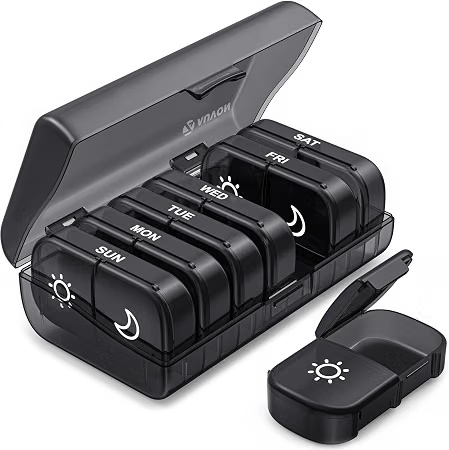
A weekly pill organizer like the AUVON Weekly Pill Organizer can genuinely help you keep track of multiple medications — but it’s a tool, not a safeguard by itself. Here’s what actually goes into safe home medication management, where an organizer fits in, and what it can’t do on its own.
Why Medication Management Matters
Managing multiple medications is more error-prone than people often expect. The Agency for Healthcare Research and Quality (AHRQ) notes that patients and caregivers "commit medication administration errors at surprisingly high rates," and identifies taking multiple medications (polypharmacy) as "likely the strongest risk factor" for adverse drug events. The scale is real at a population level too: the CDC reports that more than 1.5 million emergency department visits a year in the U.S. are for adverse drug events, with almost 500,000 requiring hospitalization — and older adults are affected more than twice as often as younger people.
Best Practices for Managing Multiple Medications
The National Institute on Aging (NIA) recommends a few concrete habits: keep a written list of everything you take, including over-the-counter drugs and supplements, with the name, dose, and reason for each; fill prescriptions at one pharmacy when possible, so your records stay in one place; and review your full medication list with a doctor or pharmacist regularly, including asking whether you still need each one. Many pharmacies and clinics also offer "brown bag" medication reviews — bringing in everything you take, in its original bottles, so a pharmacist can check it against what's actually prescribed.
Where a Pill Organizer Fits In
A weekly pill organizer, like the AUVON Weekly Pill Organizer, is a legitimate tool for this — MedlinePlus describes pill organizers and similar devices as a helpful way to keep track of multiple medications and dosing times. But MedlinePlus is also direct about a key point: the organizer itself doesn't know whether your medications interact with each other — that's a separate question worth asking your doctor or pharmacist directly, not something a plastic box can check for you.
What a Pill Organizer Can’t Do
It's worth being direct about the limits here, because a pill organizer only reflects what's manually put into it. A published AHRQ patient-safety case study describes an 80-year-old patient whose pillbox still contained a blood-pressure medication that had been discontinued months earlier — she was taking more than double her intended dose — while a newly prescribed medication had never been added to the box at all, because whoever filled it wasn't kept up to date. The lesson is straightforward: an organizer is only as accurate as the person who filled it, it won't flag a new prescription or a discontinued one on its own, it doesn't work well for as-needed medications that don't follow a fixed schedule, and a standard organizer is not child-resistant. None of this means an organizer isn't useful — it means it works best as one part of a routine, not a substitute for staying on top of what's actually prescribed.
Storage and Household Safety
Where you keep medications matters too. NIA recommends keeping medicines away from heat and direct sunlight, and keeping any controlled substances in a locked cabinet or drawer. If there are young children in the home, the CDC's Up and Away campaign is worth taking seriously: it estimates that about 100 young children are brought to the emergency room every day in the U.S. after getting into medicines or supplements left within reach. Its core guidance — keep medicines somewhere too high for children to reach or see, never leave them out on a counter or bedside table, and always relock the cap — applies just as much to a filled pill organizer as to a prescription bottle, since organizers aren't child-resistant.
Building a Simple Routine
Putting this together doesn't need to be complicated: keep an up-to-date written medication list, fill your organizer from that list (or have a pharmacist help), do a quick medication review with your doctor or pharmacist whenever something changes, and store everything out of reach of children away from heat and light. A calendar, alarm, or reminder app can help with timing, but the organizer and the routine around it matter more than any single tool.
Sources
- CDC — Medication Safety: Data & Statistics
- AHRQ PSNet — Medication Errors and Adverse Drug Events
- National Institute on Aging — Taking Medicines Safely as You Age
- AHRQ — Conduct Brown Bag Medicine Reviews
- MedlinePlus — Keeping Your Medicines Organized
- AHRQ PSNet — Case Study: A Pill Organizing Plight
- National Institute on Aging — The Dangers of Polypharmacy
- CDC — Up and Away Campaign
Related Products
MedKept’s current pick for organizing weekly medications, referenced in this guide.
MedKept may earn a commission from qualifying purchases or signups made through certain links, at no additional cost to you.
Medical disclaimer: This guide is for general informational purposes only and is not medical advice, diagnosis, or treatment. Talk with a qualified healthcare professional before starting any new supplement, especially if you take medication or manage a health condition. Read our full Medical Disclaimer.