
A Beginner's Guide to Daily Multivitamins
Garden of Life, MegaFood — a "multivitamin" isn’t one product. A general daily multivitamin, a prenatal formula, and a dedicated iron supplement are built for different needs, with different amounts of key nutrients and, in iron’s case, a real safety warning worth taking seriously. Here’s how to tell which one (if any) actually fits you.
Who Actually Needs a Multivitamin?
Most healthy people who eat a varied diet already get enough vitamins and minerals from food, and don't specifically need a daily multivitamin, according to the NIH Office of Dietary Supplements. A few groups are more likely to actually benefit from one: people with a limited or restrictive diet, strict vegetarians and vegans (who can fall short on vitamin B12 and iron), adults over 50 (whose bodies absorb B12 from food less efficiently), and pregnant people — though pregnancy calls for a different kind of formula entirely, covered below.
What a Daily Multivitamin Actually Covers
A general daily multivitamin — like MegaFood One Daily Multivitamin — is built to cover a broad baseline of vitamins and minerals in roughly the amounts most adults need. It isn't built to replace meals. The NIH Office of Dietary Supplements is direct about this: a multivitamin "cannot take the place of eating a variety of foods that are important to a healthy diet," since food provides fiber and other components no pill does. Federal dietary guidance treats supplements as something to fill a specific, real gap — not a substitute for eating well in the first place.
See the full Supplements category for everything else MedKept currently lists.
Prenatal Multivitamins: Why They’re Different
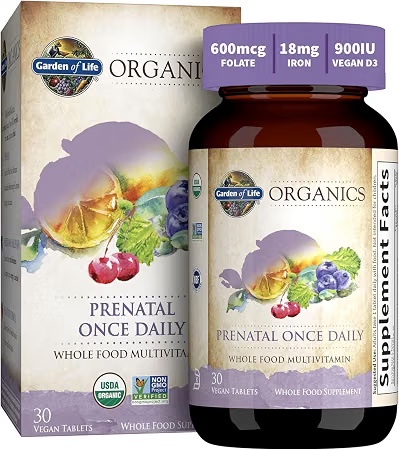
Garden of Life Prenatal Multivitamin is a different category of product from a general daily multivitamin — it's built around what's specifically needed before and during pregnancy, most importantly folic acid. Both the NIH Office of Dietary Supplements and the CDC recommend that anyone who could become pregnant get 400 micrograms of folic acid daily — starting before conception, not just after a positive test — because neural tube defects form in the first few weeks of pregnancy, often before someone knows they're pregnant. Once pregnant, that recommendation increases to 600 micrograms of folate (as Dietary Folate Equivalents) per day.
Anyone with a previous pregnancy affected by a neural tube defect should talk with their doctor rather than self-selecting a dose: CDC guidance for that specific situation involves a much higher, medically supervised amount (4,000 mcg/day), not something to figure out from a supplement label alone.
Iron Supplements: Benefits and a Real Safety Warning
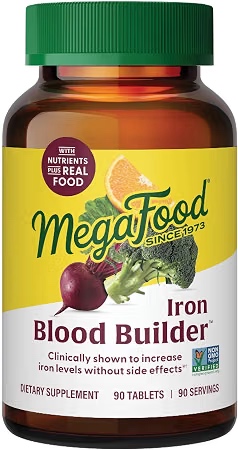
MegaFood Blood Builder Iron Supplement is a dedicated iron product, and iron is worth treating differently from a typical multivitamin ingredient. Current NIH RDAs for iron are 8 mg/day for adult men, 18 mg/day for women 19–50, 8 mg/day for women 51+ (after menopause), and 27 mg/day during pregnancy — that jump for pregnancy is a big part of why prenatal formulas and standard multivitamins differ so much.
Iron also comes with a real safety warning worth taking seriously: the NIH Office of Dietary Supplements notes that accidental iron overdose is a leading cause of fatal poisoning in children under 6, which is exactly why iron supplement labels are legally required to carry a child-safety warning. Store iron supplements — and any multivitamin containing iron — the way you'd store any other medication: out of reach of children, in child-resistant packaging.
How to Choose the Right Multivitamin for You
A simple way to think about it:
- Want general daily coverage? A standard multivitamin like MegaFood One Daily Multivitamin is the typical starting point.
- Pregnant or trying to conceive? Use a dedicated prenatal formula like Garden of Life Prenatal Multivitamin, not a regular multivitamin — the folic acid amount actually matters here.
- Diagnosed or suspected iron deficiency? A dedicated iron supplement like MegaFood Blood Builder makes more sense than getting iron incidentally from a general multivitamin — ideally after talking with a doctor, since taking iron you don't need doesn't help, and taking too much can be genuinely harmful.
Whatever you choose, a multivitamin is meant to close a specific gap, not replace a healthy diet or a conversation with a healthcare professional about a diagnosed need. See our Medical Disclaimer for more on how MedKept's content should — and shouldn't — be used.
Related Products
MedKept’s current multivitamin and iron picks, referenced in this guide.
MedKept may earn a commission from qualifying purchases or signups made through certain links, at no additional cost to you.

MegaFood One Daily Multivitamin
A daily multivitamin from MegaFood, formulated for women and men.
Medical disclaimer: This guide is for general informational purposes only and is not medical advice, diagnosis, or treatment. Talk with a qualified healthcare professional before starting any new supplement, especially if you take medication or manage a health condition. Read our full Medical Disclaimer.